Governments around the world are navigating two major challenges. As geopolitical and weather events impact energy supply, countries are turning inwards to ensure their energy security. We have already covered how nuclear power is emerging as a key component of a resilient, domestically produced energy mix.
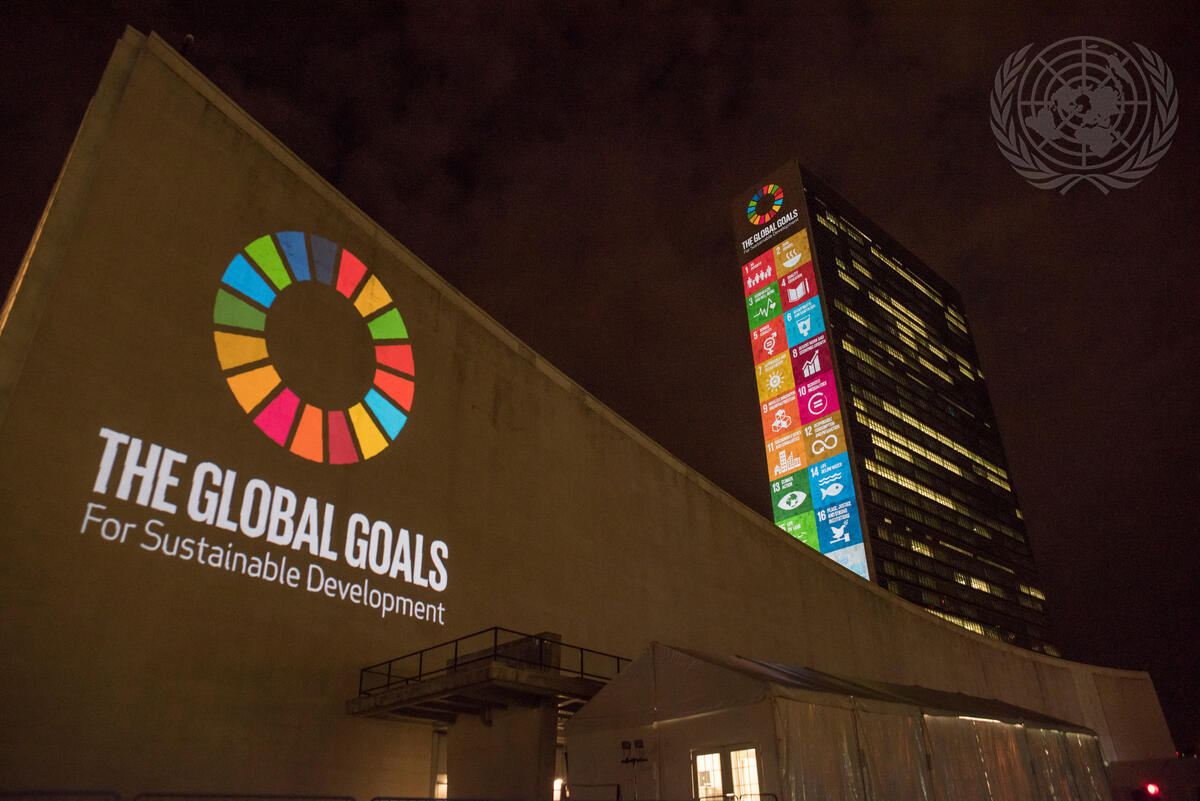
At the same time, there are universal challenges that require global cooperation. All members of the United Nations (UN) have adopted the 2030 Agenda for Sustainable Development which created the Sustainable Development Goals (SDGs). Most countries have ratified the legally-binding Paris Agreement to mitigate climate change.
Governments are increasingly looking to nuclear power, and especially Small Modular Reactors (SMRs), to meet these common environmental and humanitarian goals.
Pivotal Technology for a Fair Future
SMRs produce zero emissions during operation and provide baseload and dispatchable power. They have a lower upfront capital cost and significantly smaller footprint than gigawatt-scale nuclear power plants, making them more accessible to a wider range of communities and sites.
These features make them an especially valuable tool to achieve the Paris Agreement goals of reducing carbon emissions as well as SDG 13 – Climate Action.
New SMR designs produce more than just electricity, an important step towards meeting SDG 7 – Affordable and Clean Energy. When demand is low they can pivot to distilling water (SDG 6 – Clean Water and Sanitation), powering aquaponic farms (SDG 2 – Zero Hunger), producing hydrogen and more at no extra cost. These can be foundational for improving living standards and health outcomes (SDG 3 – Good Health and Well-Being).
Different designs also offer additional elements which further progress towards international commitments. For example, every StarCore SMR will share its unused satellite bandwidth with its host community. This can be used for applications such as remote learning (SDG 4 – Quality Education).
From Ambition to Accountability
As the deadlines to meet these commitments get closer, countries are getting more specific about how they aim to meet them. Progress towards the SDGs is assessed through Voluntary National Reviews (VNRs), and the potential to achieve the Paris Agreement is calculated based on Nationally Defined Contributions (NDCs).
These documents were once more technology-neutral but are becoming specific about project types and capacity targets. They transform political pledges into verifiable policy and raise the level of national accountability.
Nuclear power is increasingly appearing in these concrete action plans. Countries including Belarus, Turkey, Ukraine and China have explicitly mentioned nuclear in their NDCs, and Canada, Poland, Romania and the United Kingdom are committing to SMRs to meet the SDGs.
Other agreements, such as a COP28 declaration now signed by 33 nations to triple global nuclear capacity by 2050, are similarly cementing it as a cornerstone of a clean and fair future.
Clouds of Uncertainty Clearing
Many more countries and coalitions have signaled deep interest in developing or expanding their nuclear capacity, but may be hesitant to link multi-decade infrastructure projects into mandatory international reporting frameworks.
A major hurdle has been how to finance new nuclear projects, but recent developments are lighting the way. Earlier in 2025, the World Bank ended its longstanding ban on funding nuclear energy and committed to “accelerate the potential of SMRs” around the world.
Also in 2025, the government of India announced its Nuclear Energy Vision which includes having 100 GWe of nuclear capacity operating by 2047 and committing ₹20,000 crore (over $2 billion USD) to develop SMRs domestically.
New regulatory partnerships between countries to align standards and expectations are reducing redundancy in approving new SMR designs. This will allow more governments to have confidence that they are committing to a technology that is safe and reliable. Last year, the United Kingdom, United States and Canada established a framework for streamlined regulations, and nuclear regulators in Italy, Belgium and Romania united to pre-license an SMR.
The global momentum within and across borders to expand nuclear capacity appears set to remake the energy landscape over the next decade. SMRs in particular are emerging as an indispensable solution with a unique convergence of features that directly address the Paris Agreement and a spectrum of SDGs. In a tumultuous world, they are set to bring energy security to governments and prosperity to their citizens.