This is one of the most common questions we get. While it is widely known that used nuclear fuel cannot just go in the landfill or the sewer, there is a long history of stringent practices to ensure that it is transported and stored in extremely safe ways that shield people and the environment from any negative effects. There is also a growing movement to treat used fuel as a resource and not waste, and new designs for power plants are increasingly looking to run more efficiently with recycled uranium.
From Reactor to Safe Storage
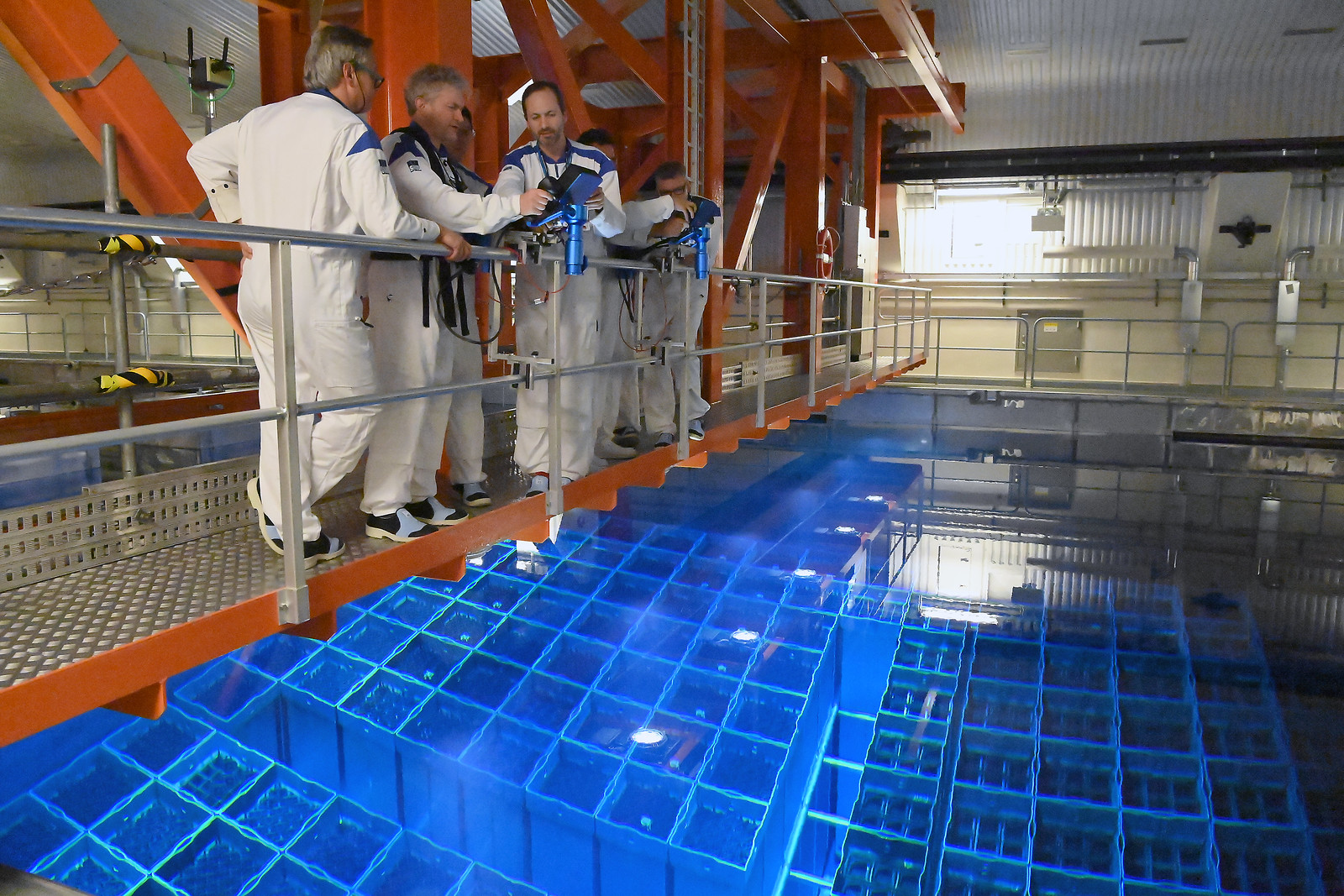
Once nuclear fuel has been used in a nuclear power plant, it becomes “spent fuel.” It is highly radioactive and hot when first removed from the reactor. Operators carefully transfer these fuel bundles into large, water-filled pools right at the power plant site. This initial “wet storage” typically lasts 5 to 10 years, allowing radioactivity and heat to significantly decrease.
After this cooling period, the fuel can move to “dry storage.” First, the fuel is placed inside sealed steel and concrete casks that are designed to withstand extreme conditions like floods and fires. These casks have been found to show no corrosion after over a decade and are theorized to be stable for up to 1,800 years.
Once sealed, the casks are transported to a dry storage location, which is often a carefully selected location deep underground. The safety record of moving spent fuel is exceptional – globally, there have been over 20,000 of these shipments in the past five decades with zero instances of radioactive materials escaping and harming people or the environment.
Locked Deep Underground
The safest dry storage location is known as a deep geological repository (DGR). The spent fuel may still be hot and radioactive, but these sites use multiple layers of engineered and natural barriers to contain and isolate the waste for hundreds of thousands of years. Some important characteristics of such locations include air circulation, stable rock formations and the absence of groundwater.
Sites for DGRs are selected strategically. For example, Canada’s Nuclear Waste Management Organization recently selected the Ignace, Ontario area from among 22 interested communities as the site for the country’s first DGR. This decision followed over a decade of scientific studies and a consent-based process. In late 2024, both the Township of Ignace and Wabigoon Lake Ojibway Nation confirmed their willingness to host the project.
The DGR will be built to a depth of 650-800 meters below ground and feature a robust design, including durable fuel containers, bentonite clay, and the natural host rock. Construction is expected to begin around 2034, with operations starting in the early 2040s.
Burden to Boon
Spent nuclear fuel is not just waste. An astounding 96% of it can be recycled to produce new fuel, extending our energy resources and reducing the amount of high-level waste needing permanent disposal.
Of the 400,000 tons of spent nuclear fuel that has been produced globally since the advent of nuclear reactors, only about 30% has been reprocessed. This stockpile of readily available uranium in dry storage represents an important alternative to mining it from the earth.
So far, only a handful of countries have participated in recycling fuel. For example, France has processed tens of thousands of tons at a plant that opened in 1976 and Japan is in the final stages of opening a new reprocessing facility to replace a smaller one that it decommissioned in 2018. The United States and Canada are both reportedly exploring policy options to begin recycling spent fuel as part of their long-term energy strategies.
Advanced reactor designs, including many Small Modular Reactors (SMRs), are being developed to make even better use of recycled fuel formulations. By extracting even more energy, these frontier facilities can further reduce waste volume and create a more sustainable, “closed” nuclear fuel cycle.
Greening the Fuel Cycle
In remote communities that rely primarily on diesel for electricity and heat, their fuel―when burned―is 100% consumed, 0% recyclable, and is known to produce emissions that can lead to serious health conditions, damage local vegetation, and contaminate bodies of water.
Nuclear plants do not produce pollution during operation, and spent nuclear fuel has a strong record of being safely transported and stored. While fossil fuels are involved in mining uranium, increasing initiatives to reprocess spent fuel would reduce the emissions associated with procuring uranium.
For communities that are looking for a cleaner source for energy that operates around the clock in any weather, nuclear power – especially Small Modular Reactors that can be scaled to meet specific needs – are emerging as a top choice.