Food security means having reliable access to affordable and nutritious food. While people living in cities enjoy seamless supply chains, those in remote regions can pay astronomical amounts for daily staples.
In Northern Canada, for example, four litres of milk can cost $10―nearly double the cost in Toronto. Recent data from Canada’s territories indicates that food insecurity affects 21.8% of households in Yukon, 34.2% in the Northwest Territories, and a staggering 58.1% in Nunavut. A significant portion of this is Indigenous communities where decades of colonial policies disconnected these groups from their traditional lands and food systems.
Farming can be expensive or impossible in these regions due to a prohibitive climate, the high cost of diesel and other factors. Hydroponic and aquaponic farms represent an important alternative by maximizing healthy output with minimal land use, but still require significant amounts of energy for heating and other controls.
Small Modular Reactors (SMRs) will shift the paradigm of food insecurity. By providing clean energy at predictable prices, they can power indoor farming and enable nutritious food to be produced, stored and distributed mere minutes from where it will be consumed.
Farming Anywhere
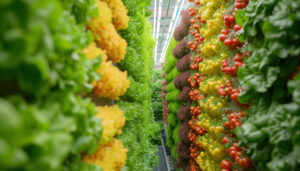
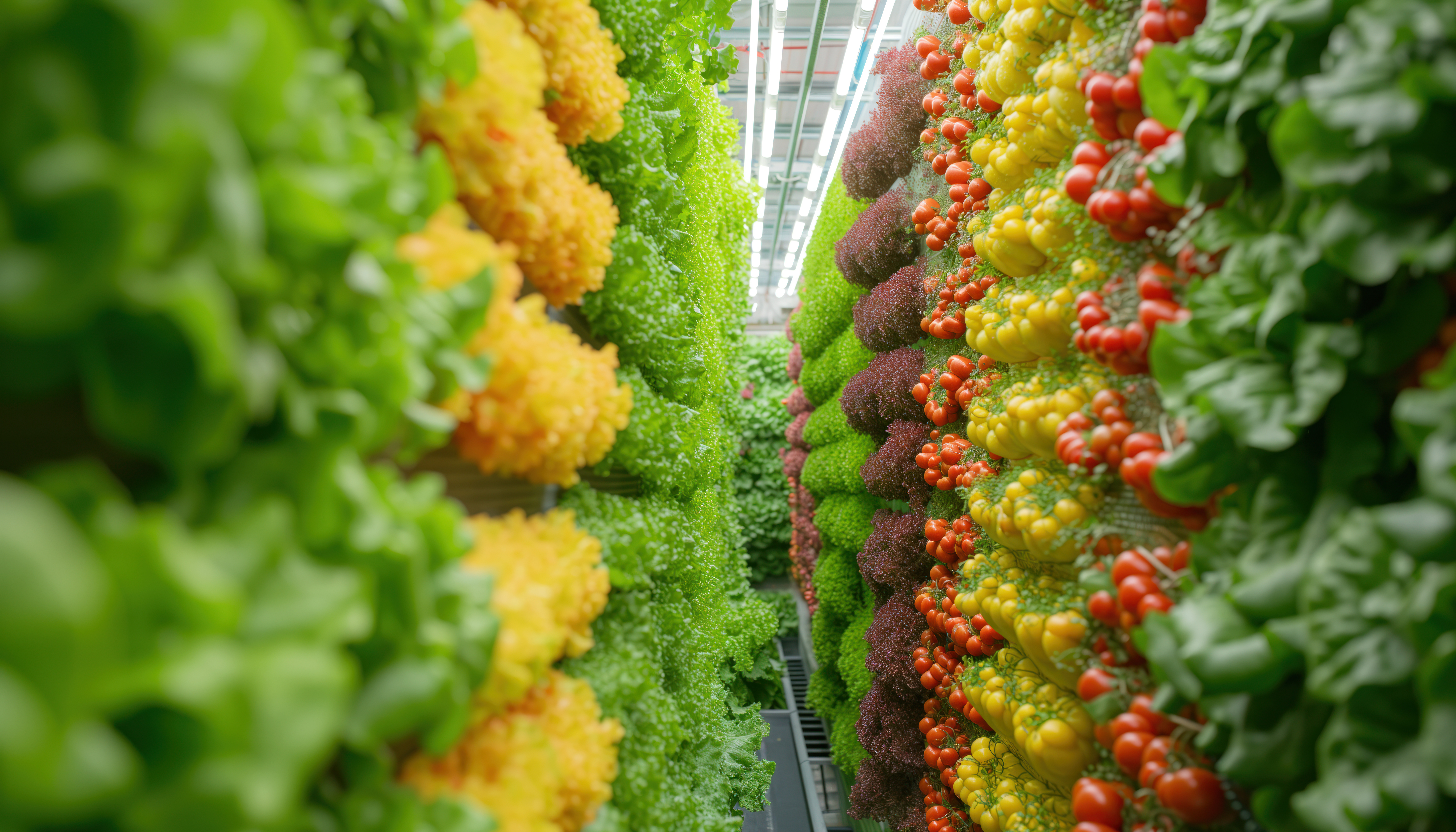
Hydroponic, aquaponic, and other forms of Controlled Environment Agriculture (CEA) allow food to be grown indoors in any climate with significantly less land and water. They also require less fertilizers and no pesticides since they are closed systems.
In a vertical hydroponic system, plants grow in water boosted with nutrients instead of soil. It can yield up to 65 heads (41 kg) of romaine lettuce per square meter per year, enough for over 250 salads. This is an eleven-fold increase over traditional farming’s six heads (3.9 kg) per square meter.
Aquaponic farming is the next step up from hydroponic farming. Here, fish such as tilapia and trout are added to the water in which plants are grown. Their presence reproduces the natural ecosystems of rivers and lakes: fish waste is broken down by bacteria and fertilizes vegetables; the plants filter the water to create a healthy environment for the fish.
Plants in aquaponic systems often grow 30-50% faster than soil-grown plants, and the system uses 20 liters of water or less per kilogram of lettuce―a 90% reduction from conventional irrigation that uses 250 liters for the same crop. As an added bonus, the fish grow in a clean and controlled environment and are suitable for consumption.
CEA systems are not just for people. They can also be used to produce nutritious feed for livestock, enabling meat and dairy production in new climates.
Hydroponic systems can be used to produce fresh, green feed from grains in about one week. Known as Hydroponic Green Forage (HGF), it is highly digestible, rich in vitamins and minerals, and high in moisture. These vertically stacked growing systems use less than 1% of the land and under 10% of the water needed in open field farming and can produce hundreds of kilograms of green feed every day.
While livestock cannot live exclusively on HGF, it can significantly reduce the amount of dry feed that needs to be shipped in. For cows and chickens, it can make up half their diet, greatly reducing the cost of their meals while significantly improving the health of the animal and the quality of their milk or eggs.
Growing food locally not only tastes better, it also contains more of the nutritional elements that start to degrade as soon as crops are harvested and reduces the spoilage, potential delays and emissions associated with transportation. These “food miles” represent nearly 20% of the food industry’s carbon footprint.
Food is Energy
Energy powers every step of our food system. It is needed to grow crops, process harvests, maintain freshness, transport goods and prepare meals.
It is also needed in great amounts by indoor farming installations, which are the only option for climates where traditional farming just isn’t possible. A recent study found that existing CEA provides less than 1% of US food crops, yet consumes more energy than all open-field cultivation.
When energy is expensive or unreliable, it adds costs to every part of an ingredient’s journey from farm to table. True food security requires a stable and affordable source of power.
SMRs provide consistent energy around the clock in any weather at predictable prices. In addition to electricity, SMRs also generate very high temperature heat which can be used to heat indoor farms and livestock housing, pasteurize ingredients, produce clean water for drinking and irrigation, and more.
SMRs bring energy stability to remote food systems. They provide a platform for predictable agriculture and certainty for food storage, distribution and preparation. By replacing diesel, they also eliminate the emissions and volatility related to fuel prices and shipping.
Subsidizing Production Instead of Consumption
Many governments subsidize costs of essential items for people in remote communities. The Nutrition North Canada (NNC) subsidy, for example, supports 124 communities with an annual budget of nearly $150 million CAD.
Without the NNC program, that $10 jug of milk would cost upwards of $20 in Nunavut’s capital of Iqualuit.
Such programs are necessary to combat food insecurity in regions that are subject to a “diesel and distance tax”, but SMRs present an opportunity to reduce both the diesel and the distance required to make nutritious food affordable and available.
While it will take a few years to build an SMR and establish indoor agriculture, this could eventually bring the price of 4 litres of milk in Iqualuit down to under $8, without any subsidy.
Indoor agriculture cannot replace everything that is currently shipped in, but it can significantly contribute to increasing local health outcomes and lowering grocery store bills.
Hydroponic and aquaponic farms and other forms of CEA have capital costs which may be prohibitively high to the local residents who would own and operate them. By shifting policy from subsidizing imported groceries to supporting entrepreneurs who will feed their neighbors, governments can provide a permanent solution to food insecurity.
Combining the versatile energy from Small Modular Reactors with climate-proof Controlled Environment Agriculture puts remote and northern communities in control of building their food systems in ways that align with their culture and preferences without compromising on energy security or environmental impact.