Small Modular Reactors (SMRs) are often discussed as a promising solution for remote locations. These small nuclear power plants can help communities and industrial operations end their reliance on diesel fuel and bolster their renewable energy sources. But “remote” is a vague term, and not all SMR designs can work in all remote locations.
At StarCore, we are especially focused on overcoming the challenges of safely building and operating SMRs in the most isolated places.
“This gives us engineering requirements that do not constrain other SMR designs,” explains Dr. Leo Eskin, Chief Technology Officer at Starcore. “But these very remote places are where residents and businesses are currently experiencing the highest energy costs.”
Costs and Complexities of Isolated Installations
In addition to being small, SMRs are also modular, which means that components are built in highly controlled factories, carefully shipped, and assembled on-site. The pieces are generally transported by boat, rail or road. This prefabrication simplifies the cost and complexity of construction by reducing the need for excessive equipment and narrowly specialized labor on site.
“Remote sites are considered ideal candidates for SMRs due to their high cost of electricity,” explains Dr. Eskin, “but these are locations where it is very difficult and expensive to build. You have to be very efficient in the construction process.”
While there is no specific definition for a remote site, these are places that rely primarily on diesel generators.
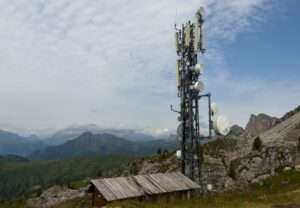
They are too far to justify building transmission lines at a cost of up to $1 million per mile or the geography is inhospitable for a natural gas pipeline. They may be inaccessible by water, not connected to rail systems or challenging to access by road.
This elevates the price of fuel and makes any repairs or upgrades to existing power generation systems very expensive.
Designing Specifically for the Most Remote
“Figuring out how to physically get our small modular reactors to the very remote communities where they could be most beneficial has been our primary focus since day one,” says Dr. Eskin. “But it is surprising how challenging it can be. Transportation is a major hurdle. Many roads simply can’t handle components weighing more than about 100 tons.”
Since a StarCore SMR has a lifespan of around four decades and only needs to be refueled roughly once every seven years, it is more economical for us to design within environmental constraints than to upgrade infrastructure to accommodate larger and heavier loads.
Once on-site, each reactor generates around 10 MWe – enough for small communities with several thousand households. They can also be built in groups to meet larger demand now or in the future.
“We’ve found that this size of reactor will sit right at the nexus being logistically feasible, cost effective and sufficiently powerful for the most remote communities,” explains Dr. Eskin. “We can generate electricity more reliably and at a significant savings to their residents, which will free up budgets to spend on other things that will improve their lifestyle.”
Standalone or Supporting Renewables
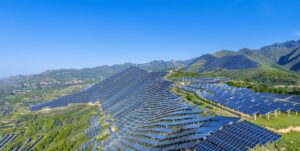
We are glad to see that renewable energy sources are increasingly meeting some of the demand for electricity in far flung places, but we also recognize that wind and solar alone are not sufficient to fully replace diesel.
“As a rule of thumb, for every megawatt of wind or solar power, you would also have a megawatt of gas turbine somewhere on the grid ready to provide electricity on a calm or cloudy day,” says Dr. Eskin.
This gas turbine can be replaced by battery storage, but as Dr. Eskin explains, the current technology here is very expensive, uses materials that are harmful to the environment, and still cannot store enough energy to last through extended periods such as a storm that lasts multiple days.
Keeping it Simple
While a Small Modular Reactor may sound like a significantly more complicated system than a diesel power plant, they are functionally quite simple. Both incorporate a very robust power generation system: using a source of energy (nuclear reaction vs. diesel combustion) to produce heat and drive a turbine.
“We are being very intentional about reducing complexity to make our SMRs easier to maintain and service,” explains Dr. Eskin. “Anyone who has previously operated a combined cycle system would recognize about 80% of the components of a StarCore SMR, such as the types of pumps and heat exchangers.”
While other designs use bespoke parts and exotic methods of generating electricity, StarCore leans towards incorporating off-the-shelf hardware and time-tested turbines to simplify onboarding and reduce delays should anything need to be repaired or replaced.
From a safety standpoint, the design incorporates TRISO fuel and helium for cooling, technologies that are considered to be inherently safe. The nuclear components of StarCore’s SMR rely on passive safety, meaning that their design prevents negative outcomes in case of any disruption without the need for human intervention or external power sources.
Starcore’s SMR design is a practical solution to a major logistical problem. By focusing on the unique challenges of the most isolated locations, we have engineered a power source that is not only safe and clean, but is also realistic to build and maintain in the most remote environments. Our commitment to simplicity and accessibility ensures that these communities can reliably transition to a more sustainable energy future.