We opened our series of posts on the digital divide with an overview of how digital progress requires steady and sufficient power. In part two, we look at how this is particularly true in digital classrooms. Students can complete diplomas and degrees without leaving their homes, but the virtual whiteboards, online video streams, and digital textbooks depend on a stable electrical supply and sufficient internet access.
Data from the Auditor General of Canada shows that fewer than 43 percent of households on First Nations reserves have high-speed broadband, compared to over 99 percent in urban centers.
Across Canada, educational disparities between urban and rural areas remain stark. According to a Statistics Canada study on educational attainment, young adults living in rural communities are roughly twice as likely to lack a high school diploma compared to those residing in major urban centers.
The divide is even wider in isolated Indigenous communities. High school completion rates for First Nations youth living on-reserve hover around 46 to 49 percent, compared to 82 percent nationwide. For Inuit youth living in Nunavut, graduation rates drop to 33 percent, reflecting the steep educational barriers created by physical isolation.
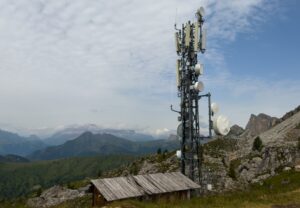
StarCore’s Small Modular Reactors bring dependable electricity and free satellite bandwidth, eliminating the uncertainty in the infrastructure required for remote learning.
Transforming Remote Learning Outcomes
For decades, students in isolated northern First Nations were forced to leave their homes at 13 or 14 years old to attend high school in distant cities, but modern e-learning platforms have begun changing this reality.
Institutions like the Keewaytinook Internet High School, Athabasca University and Université TÉLUQ allow students in fly-in communities to earn accredited diplomas and post-secondary degrees while remaining at home surrounded by family support.
Distance learning also preserves local heritage. Platforms like FirstVoices allow Elders to teach Indigenous languages directly to younger generations.
Recent Statistics Canada labor market data shows that obtaining post-secondary qualifications completely closes the employment gap between remote and urban residents. E-learning keeps talented young people who go on to manage essential municipal infrastructure, local businesses, and health facilities rather than driving youth migration to major cities.
Distance learning is not possible without teachers, many of whom are also located in remote locations. They similarly benefit from faster and more stable connectivity. Not only to reliably deliver their lessons, but also to collaborate in remote teaching networks to build skills and stay connected, reducing professional isolation.
Energy Requirements of Virtual Classrooms
These opportunities require dependable electricity to enable the digital devices and classroom software that underpins remote education.
Over 200 remote Canadian settlements rely on legacy diesel generators that struggle under fluctuating modern power loads. Voltage drops, frequency shifts, and micro-outages routinely interrupt live online exams and disconnect virtual classrooms.
In severe cases, power constraints halt education entirely. When wildfires damaged transmission lines supplying power to distant communities in Manitoba, generator constraints stopped school construction at Sakastew School in Pukatawagan because local generators could not supply enough electricity. This left hundreds of children stranded without in-person or remote learning for months.
Powering Resilient Learning with Clean Energy
Solving this challenge requires a fundamental shift in how remote energy systems are built.
SMRs offer reliable and clean baseload power that stabilizes remote microgrids. StarCore’s solution additionally brings free satellite bandwidth to host communities, ensuring that students have the necessary current and connectivity to advance their studies.
By replacing fragile diesel reliance with steady nuclear energy, remote communities can keep their screens lit, empower their educators, and ensure every student reaches their full potential.
Join us in part three of our series on the digital divide where we explore the links between energy security and time poverty.