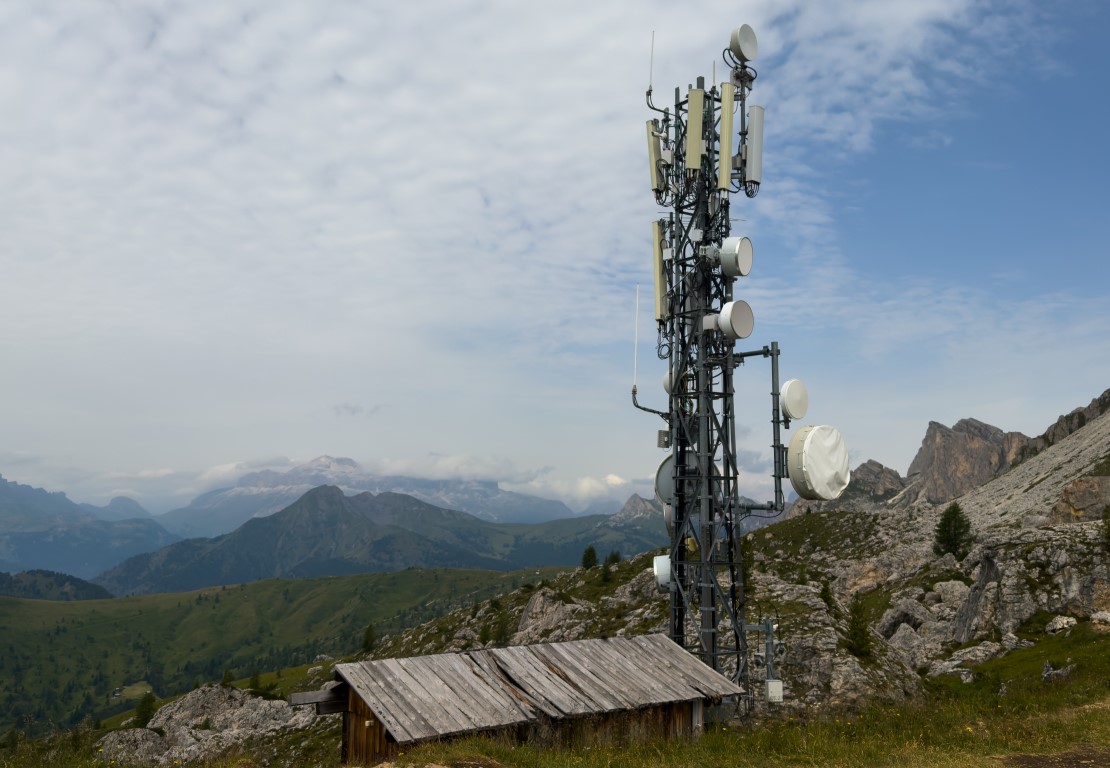
Internet access has evolved from a consumer luxury to an essential public utility, but connectivity and digital literacy are moot points if the power grid cannot support them.
Even in remote communities where residents live hyper-local lives, digital exclusion carries steep consequences. Without reliable broadband, residents cannot access modern telehealth services, file tax forms, manage online bank accounts, or participate in remote education.
“The lack of broadband has been a public safety failure,” according to Canadian federal Northern and Arctic Affairs Minister Rebecca Chartrand. “When families can’t call for help or nurses can’t access files or lives are at risk when you’re travelling roads without phone service, without internet.” An outage can completely disconnect an isolated town from emergency alert networks and vital government support, as was seen during Canada’s 2024 wildfire season.
As isolated areas slowly but surely gain broadband internet access, they face a parallel challenge: generating the steady and reliable power required to keep these devices online.
Today we present the first article in a series diving into how inadequate energy affects modern devices and community development in places that rely on diesel generators.
In the coming weeks we will look at how Small Modular Reactors (SMRs) can improve connectivity issues, access to education, time poverty and economic diversification by providing high quality, load-following electricity that protects equipment and prevents outages.
Bridging the Gap Across Canada
In an increasingly connected world, data poverty has emerged as a major social barrier. This occurs when individuals or households cannot access or afford sufficient internet connectivity to meet their essential daily needs.
Governments around the globe have established ambitious infrastructure targets to eliminate data poverty. Canada set a clear national benchmark to connect 98 percent of households to high-speed broadband by 2026, with a goal of 100 percent coverage by 2030.
As of 2024, 50Mbps download speeds are available to over 97% of Canadian households, up from 84% in 2018. But the remaining 3% is all in rural areas, territories, and First Nations communities, and represents nearly 500,000 households.
About 10% of these families are dependent on diesel for electricity, creating an additional significant hurdle to reliable and affordable connectivity.
When Unreliable Energy Breaks Digital Progress
Public initiatives that deliver personal computers and satellite receivers often encounter a foundational barrier long before data reaches a screen. Well-funded digital inclusion programs often fail because aging power grids simply cannot support the underlying technology.
Over 200 communities in Canada rely on diesel for power and heat. The majority of these plants are aging and were designed for an earlier, analog era defined by steady, predictable energy demands like electric space heaters and incandescent lighting.
In contrast, modern digital equipment draws electricity in rapid, non-linear pulses through switched-mode power supplies. Mechanical governors inside older diesel generators respond slowly to these sudden load changes, creating harmonic distortion and voltage fluctuations that can damage delicate hardware.
Today’s devices and appliances are making it more difficult for plant operators to properly plan for their communities’ off-peak needs. Generating too much power can cause harmful power surges or blackouts. Running diesel plants at low capacity can cause wet stacking – a condition where unburnt fuel accumulates inside engine cylinders – increasing harmful emissions, damage to the generator, and fuel consumption by up to 30%.
Powering True Digital Inclusion
SMRs offer a clean and reliable energy solution for digital progress.
By supplying continuous, high-quality baseload power that instantly adapts to the load without carbon emissions, they protect microgrids from sudden spikes in demand and can be scaled to meet growing electrification.
Combined with StarCore’s commitment to provide free satellite bandwidth to its host communities, this steady electrical supply creates a resilient foundation for off-grid residents to fully benefit from improved health, safety, and education that is enabled by broadband connectivity.
Join us for part two of our series as we explore the infrastructure requirements of remote education.