Small Modular Reactors (SMRs) are small in size and big in safety. They offer incredible flexibility in where they can be built compared to their much larger predecessors, bringing reliable and clean energy in ways that no other technology can. One of the greatest contributing factors is their significantly reduced Emergency Planning Zones, which maintain utmost safety while significantly reducing land usage.
How Big is a Power Plant
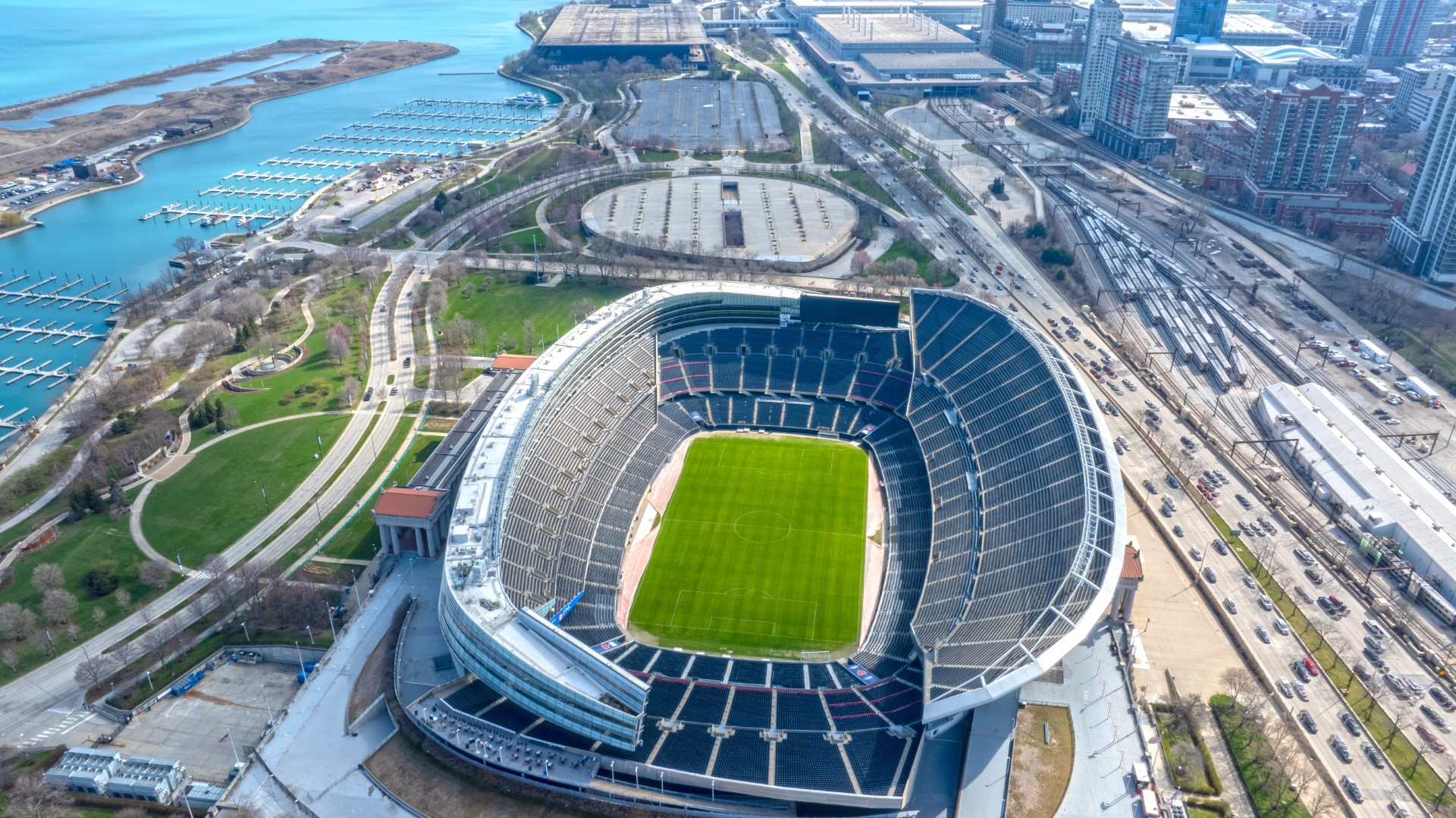
Traditional nuclear power plants are big facilities. Their footprint measures roughly 3.4 square kilometers per 1,000 MWe, equivalent to about 630 American football fields.
SMRs, as their name implies, are much, much smaller. At StarCore, our design requires only around two football fields of land for operations.
More Safety with Less Space
Beyond the plant’s footprint, its site must also incorporate an Emergency Planning Zone (EPZ), which is a buffer zone around a nuclear power plant where special preparations are made to mitigate incidents.
As an example, EPZs for traditional nuclear power plants in the United States, as mandated by the Nuclear Regulatory Commission, are 10 square miles – equivalent to around 4,840 football fields. An area this large requires significant resources and coordination.
SMRs are different. Their advanced passive safety systems and smaller radioactive inventory mean they have a much lower potential for off-site radiological releases. This has led to groundbreaking changes in emergency planning.
In China, a recent study for the now-operational Shidaowan HTR-PM 1 found that the EPZ could be as small as a few hundred meters. In Canada, the recently approved Ontario Power Generation’s Darlington SMR is expected to have a significantly smaller EPZ.
In the US, the Nuclear Regulatory Commission has approved a methodology for one SMR design that would allow its EPZ to be limited to the site’s boundary, meaning that the entire land required for both operations and safety would be around one football field.
New Features Bring New Options
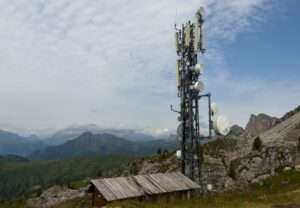
Because SMRs can fit well into tight spaces, they can be built in a wide variety of locations such as remote communities with complex topography or adjacent to industrial sites with high energy needs.
They are also ideal for repurposing brownfield locations such as decommissioned fossil fuel plants. By shoehorning into existing sites, they can be easily plugged directly into the grid to cleanly replace the lost power generating capacity.
Additionally, the variety of SMR designs opes up new possibilities. Most traditional power plants rely on large amounts of water to cool the nuclear reaction, making them unsuitable for landlocked locations. High Temperature Gas-Cooled Reactors, such as what StarCore is developing, use helium as a coolant, making them ideal for places where water usage should be prioritized for its residents.
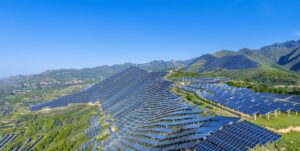
No other currently feasible electricity source can safely produce as much clean energy with so little land use. While wind, solar and hydro are important components of meeting the world’s power needs, SMRs are uniquely capable of powering communities and industries while maximizing space available for other purposes.