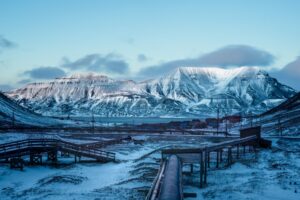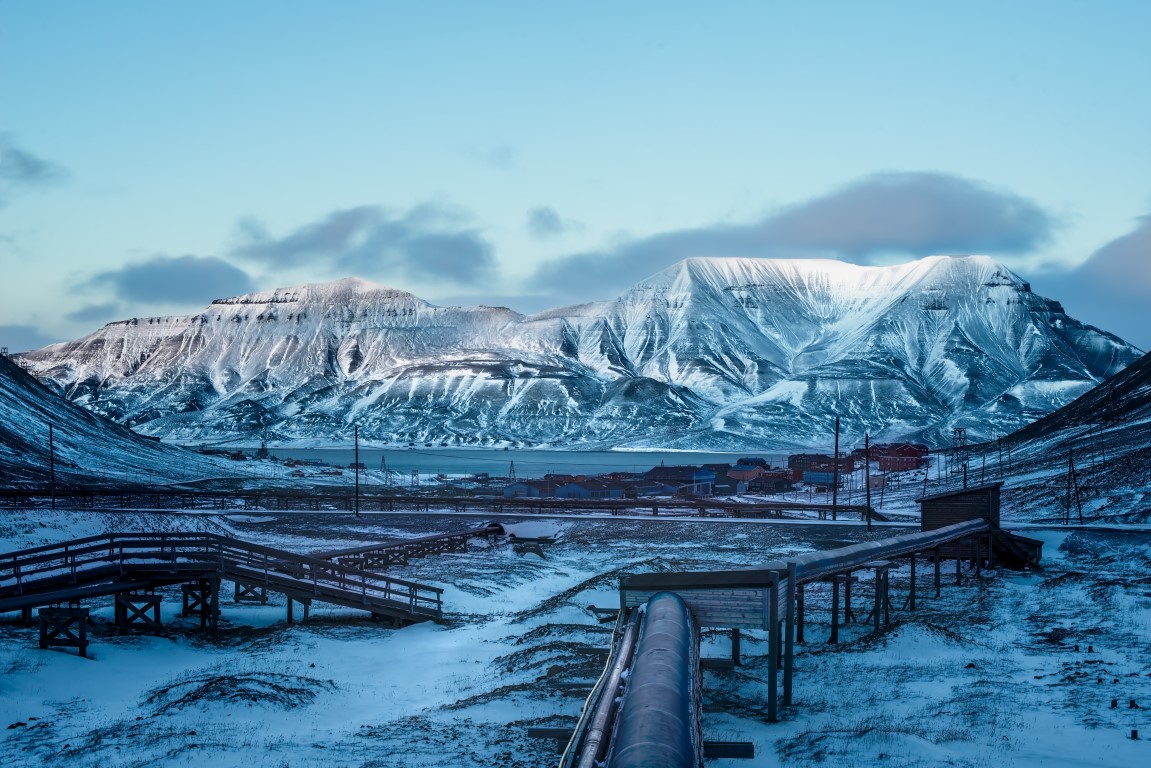
As temperatures rise across the far North, the permanently frozen ground underneath remote communities is beginning to thaw and sink. This unstable earth threatens both traditional power grids and the massive diesel storage tanks that isolated regions rely on for survival.
Securing the future of these northern communities requires a resilient approach to energy infrastructure. Small Modular Reactors (SMRs) offer a clean, localized power solution designed to operate safely on this challenging terrain.
The Infrastructure Crisis on Shifting Ground
The Arctic and sub-Arctic are warming at up to four times the global average. This rapid temperature shift is melting permafrost, the permanently frozen ground that serves as the literal foundation for northern communities and remote industrial operations. When permafrost thaws, the ice turns to water, causing the earth to sink, shift, and contract.
Melting permafrost significantly reduces the load-bearing capacity of the ground, creating a severe structural crisis for community and industrial infrastructure. The shifting earth warps roads, cracks building foundations, and destabilizes massive steel towers that support electrical transmission lines. Recent high-resolution geomechanical modeling of Northern Alaska reveals that most infrastructure is projected to be at risk between the 2060s and 2090s as the permafrost degrades.
The coming impacts on circumpolar infrastructure are predicted to be widespread. A 2022 review found that up to half of all critical circumpolar infrastructure could be at high risk by 2050. Massive traditional power plants with rigid foundations and sprawling grid networks spanning hundreds of miles of unstable tundra are becoming impossible to maintain.
The financial toll of this thaw is staggering. A 2026 study estimates that mid-century permafrost degradation could cost $261 billion in infrastructure damage across Arctic communities. Older models vastly underestimated the financial toll because they only evaluated the two-dimensional footprints of buildings. The new analysis mapped the region in three dimensions, factoring in the exponentially higher costs required to replace large, multi-story structures.
The Diesel Dilemma in Remote Communities
Northern populations and industrial operations rely heavily on fossil fuels that can only be delivered by winter ice roads or during brief summer shipping windows. In Canada’s Nunavut territory, all 25 remote communities are largely dependent on shipped-in diesel for electricity and heat. In Alaska, over 200 off-grid villages rely on localized diesel mini-grids.
Much of this diesel infrastructure is decades old and its declining reliability is beginning to impact local energy security. In February 2026, the remote Nibinamik First Nation in northern Ontario experienced a severe power crisis when their main generator suffered a mechanical failure. This put the community in a state of emergency for five days in sub-zero temperatures. Relying on an aging backup system resulted in rolling blackouts and frozen water pipes in nearly a quarter of the homes.
As permafrost melts, ground instability could compromise diesel fuel storage tanks. A comprehensive 2023 report found that over 4,500 industrial sites across the Arctic are at high risk of foundation collapse due to thawing permafrost. Researchers identified this as a ticking time bomb of potential spills. Diesel and other petrochemicals make up roughly half of the recorded toxic substances at risk of leaking into fragile ecosystems as ground containment structures fail.
Localized Generation and SMRs
Energy security in the far North requires generating power exactly where it is consumed. Localized microgrids eliminate the need to transmit electricity across hundreds of miles of volatile terrain. Small modular reactors provide reliable baseload electricity and district heating without the logistical tether of routine diesel shipments.
Safely building SMRs on permafrost requires mitigation strategies to prevent ambient heat from thawing the ground. Engineers are adapting proven techniques from the northern mining sector, pairing elevated, adjustable foundations with passive thermosyphons that continuously draw heat out of the soil.
A growing body of research focuses on advanced thermo-hydro-mechanical techniques designed to keep SMRs and the surrounding permafrost stable throughout their operational lives despite the active threat to this landscape from warming temperatures. Beyond ensuring stable conditions for SMRs, these engineering breakthroughs will directly benefit future civic and industrial construction across the Arctic.