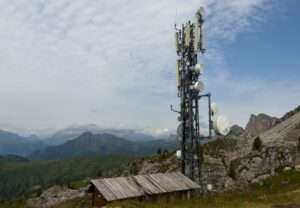
At StarCore, our primary mission is to bring clean and reliable power to remote locations. These are places where building energy infrastructure is challenging because they have rugged terrain or are hard to reach.
Given these constraints, the ideal solution should maximize the capacity for power while minimizing the amount of construction materials and fuel.
Underpinning this is the concept of power density. By building a source of energy that does more with less, we can simplify construction, reduce the time between fuel deliveries, and minimize the impact on the land.
What is Energy Density and Power Density?
Vaclav Smil, a world-renowned energy expert and Distinguished Professor Emeritus in the Faculty of Environment at the University of Manitoba, defines energy density as the amount of energy contained in a unit of fuel.
Power density refers to the rate of energy energy production from a unit of land, usually expressed in watts per square meter (W/m2).
These help us to measure and compare how much “work” different sources of power can do in a given space.
These metrics are the invisible hands that have guided human history for centuries. The transition from low-density wood to high-density fossil fuels allowed humans to move from sprawling agrarian lifestyles to the vertical rise of modern cities and high-speed global travel. This shift allowed us to do more work with less land, enabling the industrial and technological leaps that define the modern world.
Energy Density: Comparing our Fuel Options
To illustrate this, it is helpful to look at the energy content by weight of different fuels.
A kilogram of wood provides about 15 megajoules of energy; the equivalent weight of coal contains 24 megajoules. For steam powered boats, shifting from wood to coal meant that the amount of fuel required to travel an equivalent distance was cut nearly in half. Mariners could travel further or carry more cargo.
Diesel, with 45 megajoules per kilogram, is an even more efficient source of power. Diesel generators have become the status quo in remote locations over the past century because they reduce the amount of fuel that needs to be brought in and stored.
Uranium, the key element in most nuclear fuel, packs an incredible 3,500,000 megajoules per kilogram when enriched to just 3.5% – what is used in most operating reactors today which only need to be refueled every few years.
When uranium is enriched to an even higher level, such as the nearly 20% specification of High-Assay Low-Enriched Uranium (HALEU) fuel that is incorporated in many modern designs for Small Modular Reactors (SMRs), this density increases to 19,000,000 megajoules per kilogram. A single fuel delivery can last up to a decade.
For remote locations, the logistics of shipping and storing fuel is a huge expense and headache. SMRs require a single truckload once every few years, replacing the need for consistent and risky deliveries of massive amounts of diesel that are stored in expansive tank farms.
Power Density: The Footprint on the Land
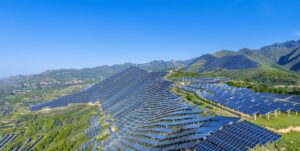
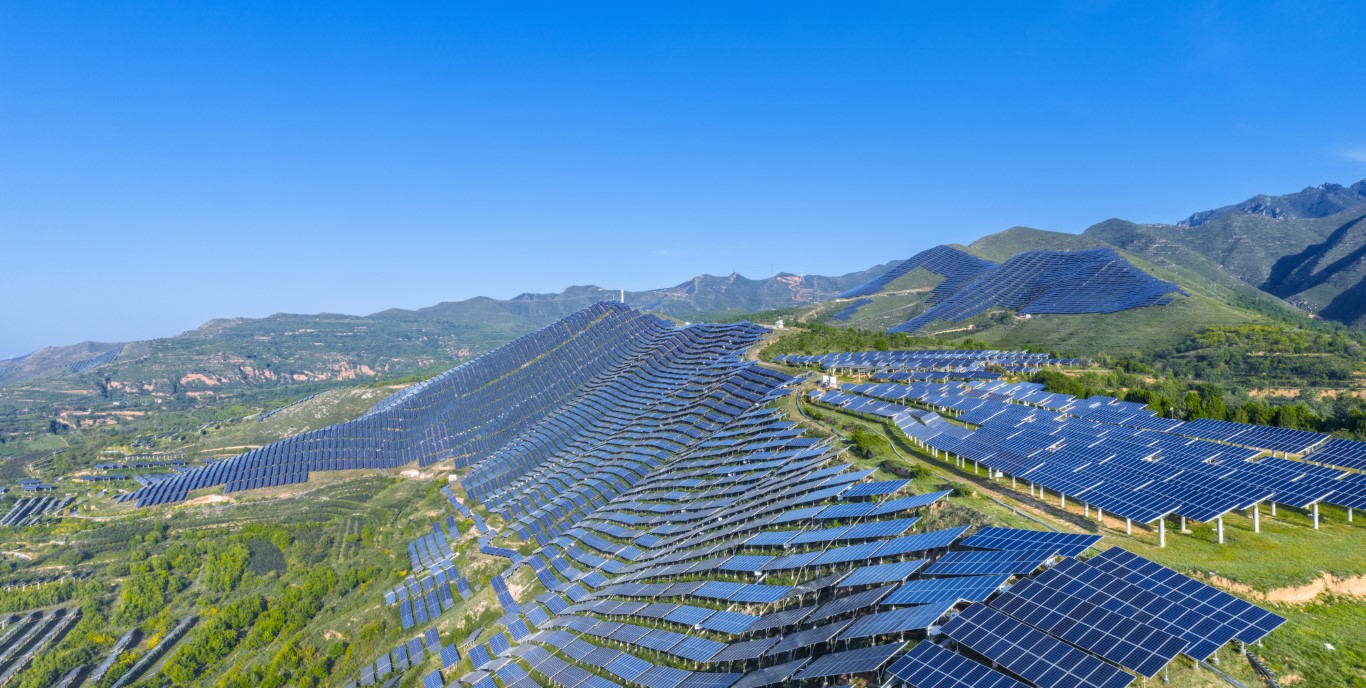
Solar and wind are important options to consider because they harness fuel from the environment, eliminating deliveries entirely. But they can conflict with another constraint: how much land is required for power sources.
Nuclear power plants produce an average of 1,000 W/m2. This includes the plant itself as well as other infrastructure such as the buffer space required for emergency situations.
Onshore wind farms require significant distance between each turbine. In the most favourable conditions they can produce 4 W/m2, requiring at least 250 times more land, and often need significantly more.
Modern solar technologies have become much more efficient, with some advanced solar farms reaching power densities of 10 to 20 W/m2. Even with these improvements, they still require at least 50 times the surface area of nuclear power for the same output.
Wind and solar are often co-located with other uses. Solar panels can be installed on roofs and the space between windmills is often used for ranching and agriculture. But when space is at a premium – such as in mountain villages or locations that are difficult to bring materials into – renewable sources can be prohibitively expensive or even impossible to build.
Will SMRs Be Another Successful Failure?
Professor Smil has called nuclear power a “successful failure” because it generates 10% of the world’s electricity with minimal emissions and land use, but observes that the plants have become too expensive and complex to build.
When it comes to SMRs, he does not see them making a meaningful impact on overall power needs in the near future because of their small individual impact, uncertain construction costs and timeframes, complicated regulatory pathways, community concerns and more.
But “meaningful” is relative. At StarCore, our focus is not on shifting the entire grid to nuclear but on bringing a clean and reliable alternative to places where their only option is diesel.
This can be life changing for communities. Eliminating the volatile price and emissions of diesel and powering secondary applications such as district heating and water purification can significantly improve household finances and community health outcomes.
We are embracing the logic of energy and power density to achieve our mission. Our SMR is purpose-built for the most challenging corners of the map, eliminating the logistical burdens of transporting fuel and materials for low-density power sources and replacing it with long-lasting energy security.